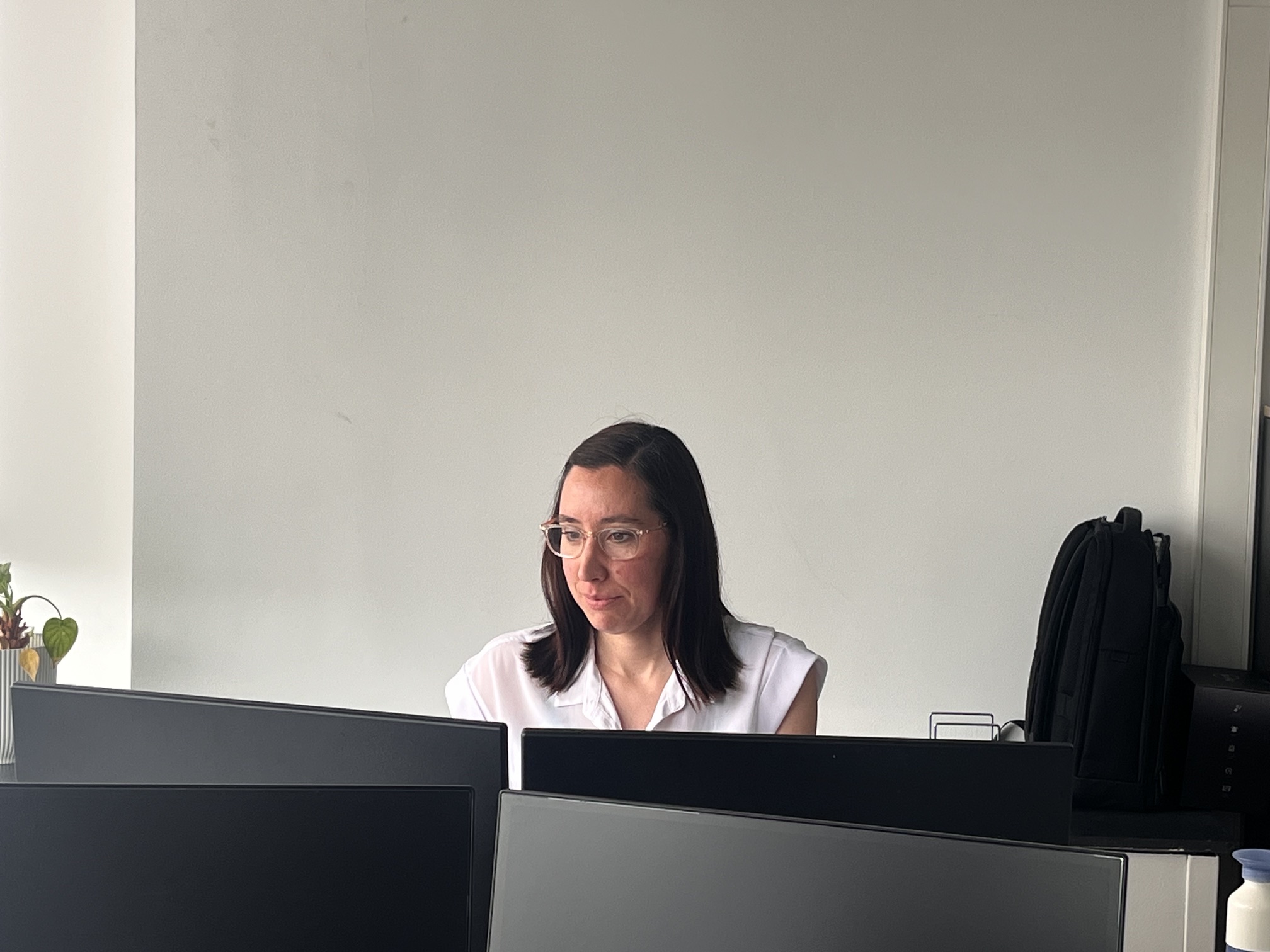
In conversation with Tinneke Jacobs, Head of the Patent Department and European Patent Attorney
Some professions immediately paint a clear picture. Most people know what a doctor, a chef or a police officer does. But ask someone what a patent attorney does, and chances are you’ll be met with a puzzled look.
Tinneke Jacobs, Head of the Patent Department and European Patent Attorney at Oryon, knows exactly why. In this interview, she explains how she found her way into the profession, what makes her work so fascinating and why involving a patent attorney early on can make all the difference for an innovative business.
Tinneke, did you always know you wanted to become a patent attorney?
Not at all. I actually discovered the profession by chance. I studied engineering and later completed a PhD. After spending several years in academia, I felt it was time for a new challenge. While exploring opportunities outside the university, I came across a vacancy at Oryon, then still operating under the name Bockstael. When I joined the firm in 2012, I knew very little about intellectual property. In fact, I didn’t even realise that patent and octrooi referred to exactly the same thing. (laughs)
What immediately appealed to me was the unique combination of technology and law. The role allowed me to build on my technical background while exploring an entirely new legal discipline. More than a decade later, that combination is still what makes the job so rewarding.
What does a typical day look like?
No two days are ever the same, and that’s exactly what I enjoy about the job. A large part of my day is dedicated to ongoing patent matters. I draft patent applications, analyse search reports issued by patent offices and prepare responses to examination reports to maximise the chances of obtaining patent protection. I also advise clients on intellectual property strategy and assist them in patent disputes.
One of the most rewarding aspects of my work is the close collaboration with clients. Many meetings take place online, but I also visit companies to see their innovations firsthand. When you’re dealing with machinery or complex technical systems, there’s simply no substitute for seeing the technology in action. As Head of the Patent Department, I also lead our patent team and mentor trainee patent attorneys as they prepare for the profession.
Many people assume that patent attorneys simply draft patent applications. Is that a misconception?
Very much so. Drafting a patent application is only one part of the job. A great deal of strategic thinking happens long before the application is written. One of the most important skills is identifying the true innovation behind an invention. I often explain this by using the example of the first sewing machine. A sewing machine consists of countless components: a table, a wheel, a pedal, a needle and many more. An inventor cannot simply claim every single part. The real challenge is to pinpoint the one inventive feature that makes the invention genuinely new. In the case of the sewing machine, that feature was the needle itself. A traditional sewing needle has its eye at the top, whereas a sewing machine needle has the eye near the tip. That seemingly small design change made mechanical sewing possible. The patent therefore protected this specific machine needle, not the sewing machine as a whole.
That’s the essence of our profession: identifying where the real innovation lies and ensuring it receives the broadest and strongest protection possible.
At what stage do you make the biggest difference for a client?
Long before the patent application is filed. Ideally, entrepreneurs contact us as soon as their innovation starts taking shape, not once the product has already been launched. Public disclosure can seriously affect patentability, so timing is crucial. Together, we determine which aspects of an innovation should be protected and how broad that protection should be. A well-drafted patent doesn’t just protect today’s product, it also makes it much harder for competitors to design around the invention. We also help clients develop an international filing strategy. Which countries matter most? Where are the key markets? Where are competitors active? And in which jurisdictions could licensing opportunities create value?
Tax considerations are another important aspect. We advise clients on how to optimise the tax benefits associated with their innovation, including the Belgian innovation income deduction.
At an early stage, we may also recommend a patent landscape analysis. By analysing existing patents within a specific technology field, we provide companies with valuable insights into the competitive landscape, identify emerging trends and uncover opportunities for further innovation.
What are the biggest challenges in your work?
Some of the most demanding cases involve “requests for re-establishment of rights”. These procedures become necessary when a patent is at risk of being lost – for example, because a deadline has been missed. They are legally complex and often carry significant commercial consequences for the client. There’s a great deal at stake, which makes these cases particularly challenging. At the same time, they’re also among the most rewarding. Successfully restoring a client’s rights is incredibly satisfying, especially when you know how much depends on the outcome.
What else gives you the greatest sense of fulfilment?
Helping clients achieve their objectives, that’s what I enjoy most. Sometimes it’s through relatively small interventions, such as securing a last-minute renewal after a client has unintentionally overlooked the payment of a renewal fee. It may seem like a minor administrative task, but it can make a world of difference.
I also find great satisfaction in mentoring junior colleagues. Watching them grow into confident patent attorneys and develop their own expertise is one of the most rewarding aspects of leading a team.
Beyond that, I value the fact that our work genuinely adds strategic value. We’re seeing a growing number of entrepreneurs use tools like ChatGPT or Claude to draft patent applications before asking us to file them. While AI can certainly be helpful, those drafts almost always require significant revisions. Artificial intelligence can generate text, but it doesn’t understand the commercial context behind an invention. It doesn’t know who your competitors are, which markets matter most, or what scope of protection will create the greatest business value. Those are the strategic considerations that define our work as patent attorneys.
What’s more, entering confidential information into publicly available AI tools may compromise the novelty of an invention.
That doesn’t mean AI has no place in our profession, quite the opposite. We use AI-powered tools ourselves to analyse large patent portfolios more efficiently and to search technical literature faster than ever before. Used wisely, AI can significantly improve efficiency. But it remains a tool. The strategic decisions still require human judgement, legal expertise and a thorough understanding of the client’s business.
Finally, what advice would you give entrepreneurs?
My first piece of advice is closely linked to what we’ve just discussed: use AI wisely. It’s an excellent assistant, but it’s not a substitute for a patent attorney. A strong patent isn’t built on technical knowledge alone. It also requires experience, strategic insight and a deep understanding of the business behind the innovation. My second piece of advice is just as important: don’t wait too long before seeking professional advice. Ideally, you should speak to a patent attorney as soon as your innovation starts taking shape. Don’t wait until you’ve launched your product. Once an invention has been disclosed publicly, it may no longer qualify for patent protection.
Want to learn more about patents?
Tinneke has compiled the questions she is asked most frequently into a practical e-book that explains the essentials of patent protection in a clear and accessible way.