
European trade mark applications are breaking records. In the first half of 2026, the European Union Intellectual Property Office (EUIPO) received no fewer than 104,263 applications for EU trade marks. That is 8.4% more than in the same period last year. Which raises the question: how do you know whether your brand name is still available? And can you rely on AI to find out?
More trade marks, more reason to think ahead
Coming up with a strong brand name is not easy. You want a name that sticks, suits your business and sets you apart from competitors. But even once you’ve found the perfect name, you’re not there yet. Are you actually allowed to use that name and register it as a trade mark?
The EUIPO figures show that European trade mark protection is more popular than ever. In the first six months of 2026, more than 100,000 EU trade mark applications were filed, breaking the previous record set in 2021. That doesn’t automatically mean it is getting harder to register a trade mark. But the figures do underline how important it is to check in advance that your trade mark doesn’t conflict with existing rights.
AI gives you the green light. Can you rely on it?
Say you’ve come up with an original brand name for a new product. Before investing in a logo, packaging and a website, you ask Claude whether the name is still available. The answer sounds reassuring: there appear to be no conflicting trade marks. So can you go ahead with peace of mind?
Not necessarily. AI can be a useful tool for an initial exploration, but a positive answer is no guarantee that your brand name is safe. Specialised AI tools can search large volumes of trade mark data, detect similarities and flag potential conflicts. However, the reliability of the results depends on factors such as the databases used, the search settings and the way the technology works. Generative AI can also provide incorrect information, or even refer to trade marks that don’t exist.
A trade mark search takes more than a search query
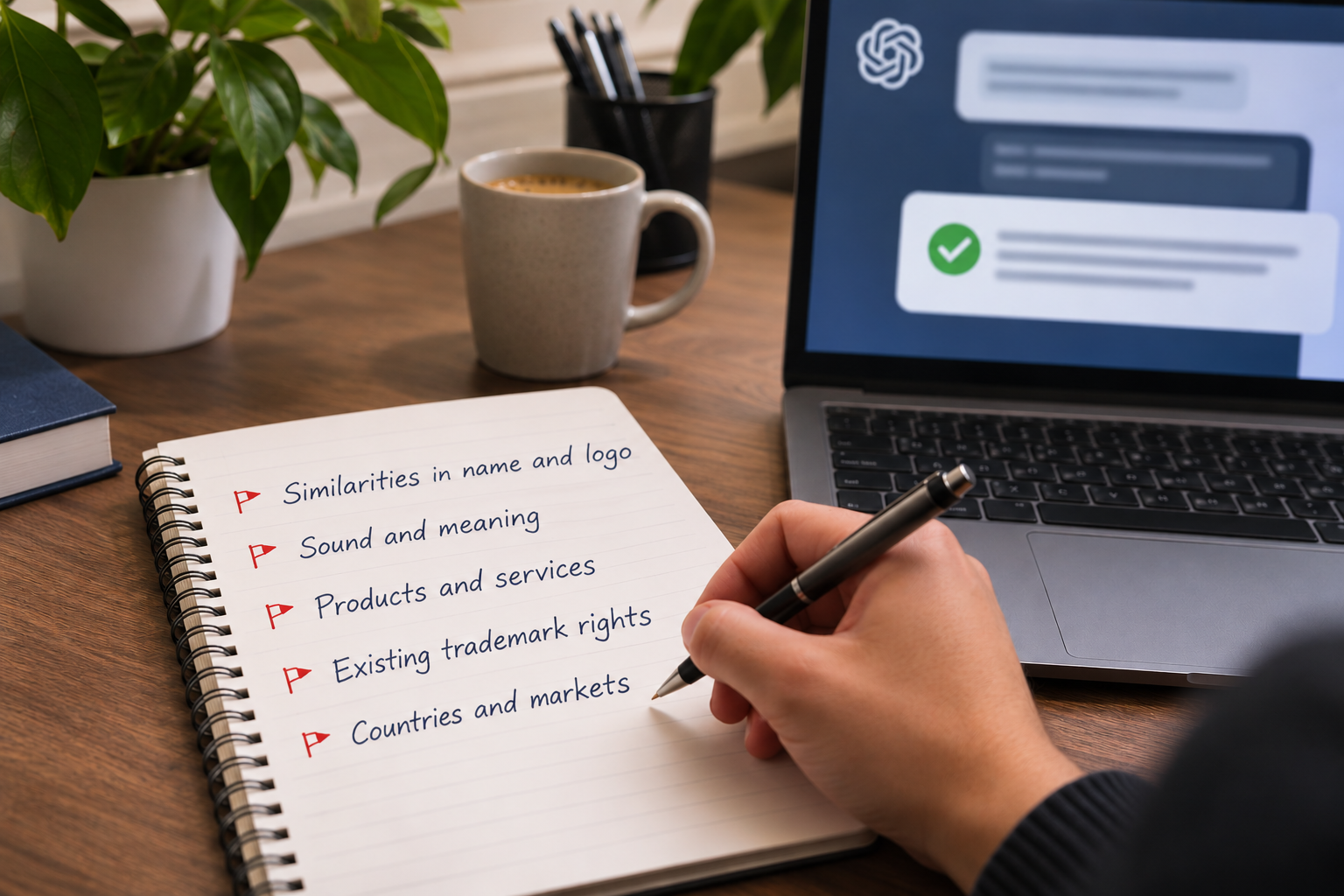
A professional trade mark search is not just about whether an identical name has already been registered. Trade marks that are spelled differently can also be a problem. Think of two names that sound very similar when spoken, or names that sound different but mean the same thing.
Other factors also come into play:
- Your goods or services: what activities do you want to use your trade mark for? Two similar names can sometimes coexist if they relate to sufficiently different goods or services.
- Your geographical market: do you only want to operate in Belgium, or beyond as well? This determines which existing rights you need to investigate.
- Your distinctiveness: how recognisable and unique is your trade mark? A highly distinctive trade mark generally enjoys broader protection.
- Earlier rights: registered trade marks are not the only ones that can matter. In certain circumstances, trade names and other earlier rights can also play a role.
So it’s not just about finding similarities. Above all, it’s about assessing the legal risks.
AI can search. A trade mark attorney can judge.
AI can make trade mark searches faster and more efficient, and that is a real advantage. But not every similarity is a legal problem. Conversely, a trade mark that seems sufficiently different at first glance can still pose a risk. A trade mark attorney assesses the search results in their legal and commercial context, taking your future plans into account as well.
For example, do you plan to launch new products later on or expand internationally? Then it’s wise to consider that when choosing and registering your trade mark. A thorough trade mark search not only helps you avoid potential conflicts, it also gives you a stronger foundation for investing in your brand.
Don’t leave your brand’s growth to chance
Your brand name is the heart of your organisation. You use it to build brand awareness, you invest in marketing and you earn your customers’ trust. Imagine discovering after a few years that your brand name infringes earlier rights. You would risk losing not only your name, but also part of the commercial value you’ve built up. That’s why it pays to check your trade mark in good time and protect it strategically. Our trade mark attorneys guide you from the initial search through to registration. And afterwards, we continue to monitor your trade mark, so we can step in promptly when others try to register a trade mark that is too similar to yours.